
Should You Put Your Press Release on the Wire?
You wrote the press release. The executive team approved it. Legal approved it. The partner approved it. Even the one person who always finds a comma to debate has approved it.
Now comes the question that can generate almost as much discussion as the release itself:
Where should we distribute it?
The honest answer is that not every announcement needs a wire service.
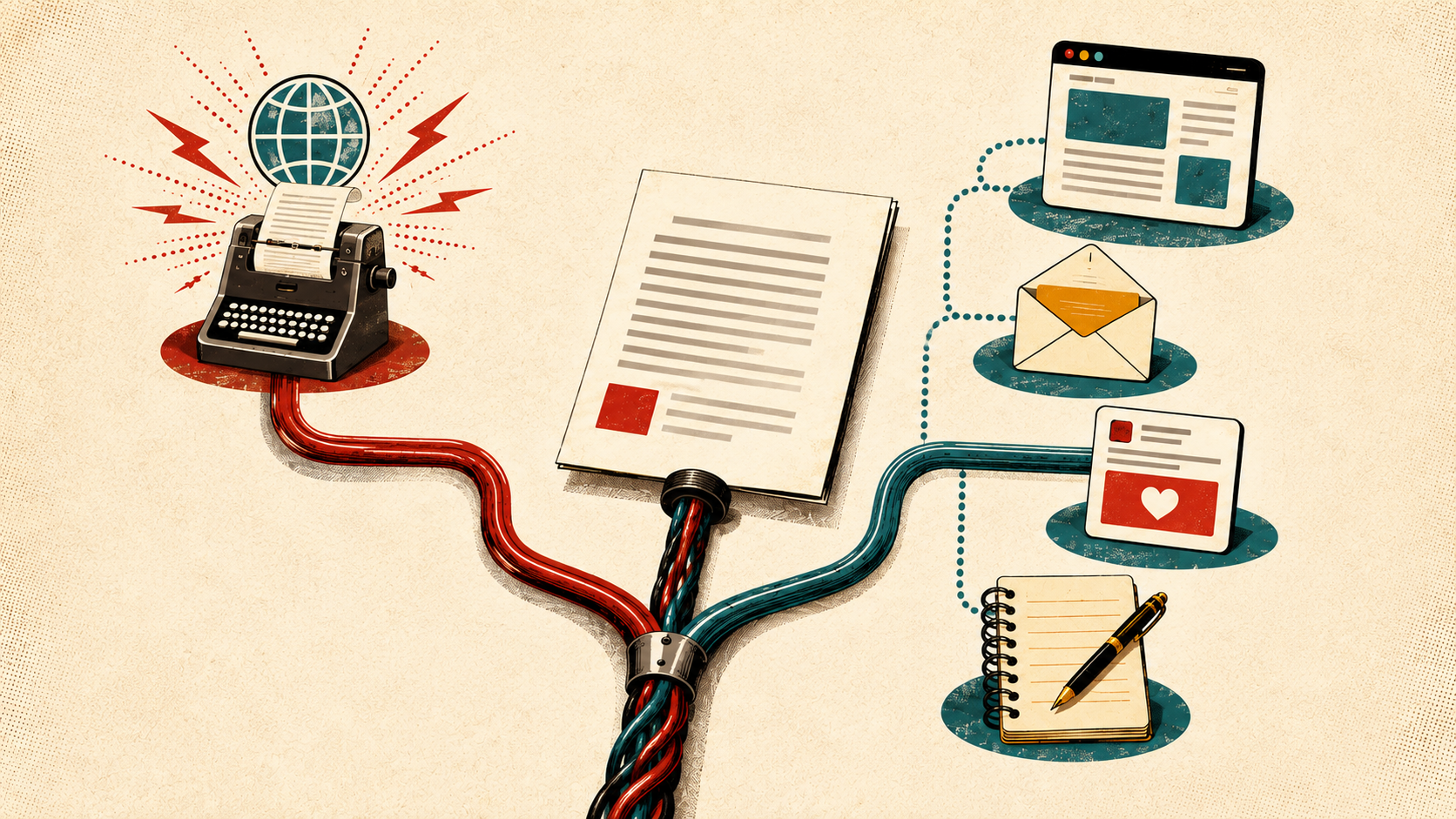
Some absolutely do. Others will perform better through a focused mix of your company website, direct media outreach, executive social channels, partners, creators, email, and paid amplification.
Distribution should follow the objective—not habit.
What a Wire Service Actually Does
Major options include PR Newswire, Business Wire, and GlobeNewswire. Each offers different geographic reach, industry targeting, multimedia support, reporting, editorial review, and financial-disclosure capabilities.
There are also lower-cost options. EIN Presswire offers individual and multi-release packages. PR.com provides several levels of paid distribution along with a more limited free option. PRLog offers free press-room hosting and distribution to search engines. These services are not interchangeable.
Before choosing one, compare its actual reach, editorial support, multimedia capabilities, analytics, targeting, customer service, and financial-disclosure options. Most importantly, look at where its releases reliably appear.
“Distributed to thousands of websites” sounds impressive. It also looks terrific in a report.
But appearing on thousands of mostly irrelevant pages is not the same as reaching the people who matter.
When a Wire Makes Sense
A wire can be a valuable part of the communications plan when you need:
Broad, simultaneous publication of significant news
Investor, regulatory, or financial-disclosure support
A formal, time-stamped public record
Geographic or industry reach beyond your existing audience
Established editorial review and operational support
Multimedia hosting, translation, measurement, or syndication
A dependable public link that partners and stakeholders can reference
For major funding rounds, acquisitions, earnings, original research, significant leadership changes, or announcements with broad stakeholder implications, a wire may be important—or even necessary.
It can also help with discoverability.
A clear, well-structured release gives search engines and AI tools a reliable source for names, dates, facts, quotes, and relationships. If someone later wants to know who joined the company, when the acquisition happened, or what the partnership involves, the release gives them something concrete to find and reference.
That does not mean syndication automatically creates lasting search authority. It means your release becomes one verifiable piece of a much larger information ecosystem.
Useful? Absolutely.
Magic? Still no.
What a Wire Does Not Do
A wire does not guarantee media coverage.
This is the part that sometimes gets lost between approving the release and entering the corporate credit card.
Wire distribution can cost a great deal, especially after adding extra words, images, geographic reach, industry targeting, or other upgrades. In return, you may receive a long report filled with syndicated links.
Those links are not meaningless. They show that the release was distributed and republished.
They are also not the same as earned media coverage.
A syndicated copy of your release is not an independently reported article. A reporter did not interview your executive, evaluate the announcement, add outside context, and decide the story mattered to their audience. The release was simply republished through the distribution network.
A wire also does not replace a pitch.
Reporters still need to understand why the news matters to their readers. They need a relevant angle, useful evidence, access to the right people, and a reason to pay attention now.
Personalized outreach, social promotion, partner participation, audience targeting, and paid support are complementary parts of a distribution strategy. They do not automatically happen when someone presses “send.”
The biggest mistake is paying for a wire and assuming the communications work is finished.
In reality, that is often when the work starts.
When Skipping the Wire Makes Sense
We increasingly work with clients that choose not to use a wire for every announcement.
Instead, they publish the release or announcement in their own online newsroom, directly pitch a focused group of relevant reporters, and build a coordinated plan around the audiences they already know.
That plan may include:
A permanent, indexable announcement on the company website
Short, personalized outreach to relevant reporters
A founder or executive post explaining the “why” in a human voice
Company posts on LinkedIn and other relevant platforms
Employee, investor, and partner amplification
Customer, expert, or creator participation
Newsletter and stakeholder email distribution
Paid support behind a strong social post or landing page
Follow-up content exploring the problem, data, or customer outcome in greater depth
This approach can be especially effective for startup milestones, product features, partnerships, customer announcements, event news, and stories aimed at a focused industry audience.
You control the destination. You control the context. You control what the reader can do next.
You can update the page, connect it to related content, direct readers to a product or report, and measure what happens after they arrive.
Most importantly, you can spend the budget where it has the best chance of creating an actual result.
The Case for Owning the Destination
When a release lives only on a wire-service page or a collection of syndicated websites, you are building on rented ground.
When the announcement also lives on your website, it becomes part of your company’s permanent story.
People can find it later. Your sales team can share it. Customers can reference it. Employees and executives can link to it. Search engines and AI tools can connect it to the rest of your company’s information. You can guide readers toward a demo, case study, report, event, or conversation.
This does not mean your website replaces a wire when disclosure, reach, or market requirements make one necessary.
It means you should treat your owned newsroom as an important destination—not an afterthought.
A Simple Decision Framework
Before choosing a distribution channel, ask:
Who specifically needs to receive this news?
“Everyone” is not an audience. Identify the journalists, customers, investors, employees, partners, or industry groups that need to know.Is there a legal, investor, regulatory, or disclosure reason to use a wire?
If so, the decision may already be made. Confirm the requirements before building the rest of the plan.Does broad syndication support the business objective?
Wide distribution can be valuable, but only if reaching a wide audience serves a real purpose.Is the story strong enough for direct media outreach?
A wire cannot rescue an announcement that lacks relevance, evidence, impact, or a clear reason to care.Do we already have credible owned and shared channels?
Consider the reach of your website, newsletter, executives, employees, investors, customers, partners, and social communities.Could the budget create more impact somewhere else?
Better visuals, original research, a customer case study, targeted pitching, or paid amplification may do more for the story than broad syndication.What does success actually look like?
Are you trying to earn original coverage, create an official record, improve search visibility, reach stakeholders, drive traffic, generate leads, or support a larger campaign?
If you cannot define success, you will have a hard time deciding whether the distribution worked.
A page full of syndicated links may look productive. It may even be productive. But measure it against the objective, not against how impressive the report looks when exported as a PDF.
Sometimes the Answer Is Both
This is not a debate between “wire” and “no wire.”
Sometimes the right answer is a top-tier wire combined with focused media pitching, executive posts, customer stories, partner support, and paid amplification.
Sometimes a lower-cost wire provides exactly the public record and modest reach the announcement needs.
Sometimes the better decision is to skip the wire, publish the news on your website, and invest the time and budget in reaching a smaller group of people who are far more likely to care.
The right choice depends on the announcement, the audience, the objective, and the resources available.
The press release is the source document.
Distribution is the strategy that puts that source to work.
Treat those as two separate decisions. Decide who needs to know, why they should care, where they already spend their time, and what you want them to do next.
Then build the distribution plan around those answers.
You will spend your budget more intelligently, measure the results more honestly, and give the announcement a much better chance of reaching the people it was written for.
